
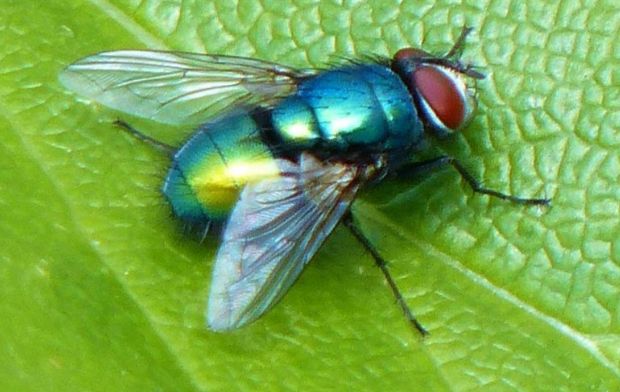
At first glance, they might seem almost "prettier" than the dull, grey housefly. Their metallic green bodies shimmer in the light, often catching our eye as they buzz around. But don't let that shiny exterior fool you. The Green Bottle Fly (or Blowfly) is a major red flag for your home—and a much greater threat to your health than you might realize.
These flies are nature’s premier cleanup crew, equipped with a "super-powered" sense of smell that can detect rotting organic matter from miles away. When they enter your home, they aren't just looking for a snack; they are looking for a place to start a colony.
It’s Not Just a Landing—It’s an Invasion
While a common fly might just track bacteria on its feet, the Green Bottle Fly takes things a step further. Their primary mission is instant reproduction.
When this fly lands on your food, it isn't just "walking around." A single female can deposit hundreds of microscopic eggs in seconds. These eggs are nearly invisible to the naked eye, but they represent a ticking time bomb. If you accidentally consume food contaminated with these eggs, the trouble begins inside your body.
From Bacteria to Myiasis: The Real Risks
The dangers of the Green Bottle Fly go far beyond simple annoyance:
Bacterial Transporters: They are notorious carriers of virulent pathogens like Salmonella and E. coli. Ingesting food they’ve touched can lead to severe food poisoning, abdominal pain, vomiting, and diarrhea.
The Danger of Myiasis: In more extreme—though rarer—cases, these flies can cause a condition known as Myiasis. This occurs when larvae (maggots) infect and live inside the tissues of a living host, including humans. They can enter through open wounds or even infect internal organs, leading to a painful and dangerous medical condition.
A Warning Sign: The "Message" of the Green Fly
The presence of a Green Bottle Fly is often a signal: something is decaying nearby. Because they are drawn to rot, their arrival usually means there is an uncovered trash bin, a forgotten food scrap, or even a small animal carcass (like a rodent or bird) hidden in a wall or attic. They are essential decomposers in the wild, but in your kitchen, they are a serious biohazard.
How to Protect Your Home
Prevention is your best defense against these metallic intruders:
Seal Your Food: Never leave food uncovered, even for a few minutes.
Tighten Trash Management: Use bins with airtight lids and empty them frequently.
Sanitize Surfaces: Immediately clean up spills or crumbs that could emit a scent.
Don’t underestimate the "shiny green guy." While they play a vital role in the ecosystem, they have no business being near your dinner table. Keep your kitchen clean, keep your food covered, and keep the Emerald Menace outside.
Have you ever had a run-in with these persistent pests or have a clever tip for keeping them away? Share your story below so we can all stay alert!